


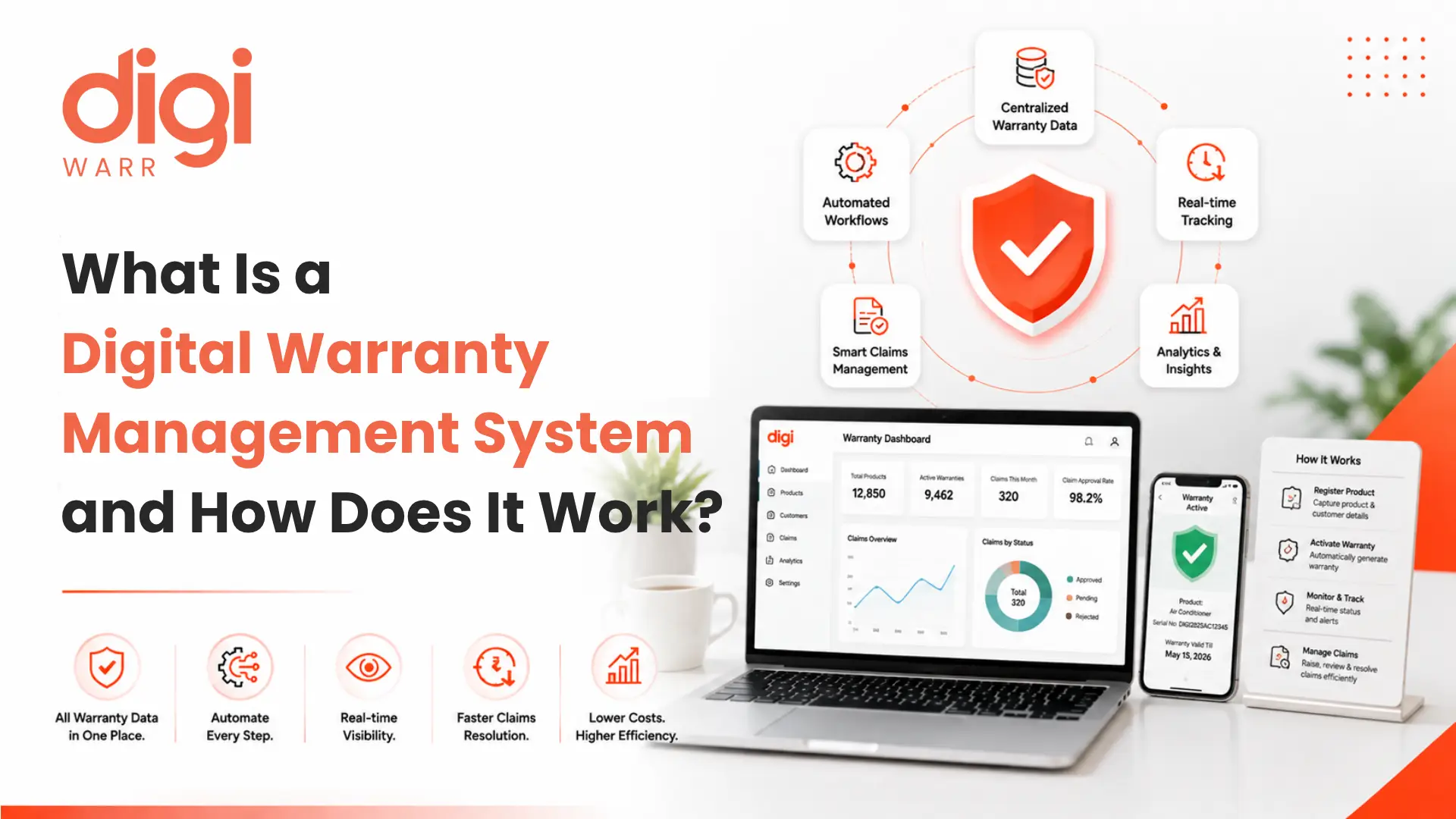
A battery manufacturer can usually tell you how many units left the factory last month. Ask the same manufacturer how many of those units are sitting in dealer stock past the sales window, or how many claims are stuck waiting for approval, and the answer often gets vague. Warranty information tends to live in registers, phone calls, and someone’s memory of the dealer who always has issues. A digital warranty management system changes that keeping every product, claim, and decision connected in one place, and understanding how it works is worth doing before you assume your current process is good enough.
Table of Contents
ToggleA digital warranty management system is software that replaces the spreadsheets, paper registers, and scattered phone calls manufacturers usually rely on to track warranty activity. Instead of treating a warranty claim as a one-time event, it treats the entire product journey as something worth recording. From the day a product enters inventory to the day a claim gets resolved.
This is where a warranty management system earns its name. It does not just log complaints. It connects product registration, dealer sales, customer activation, claims, repairs, and replacements into a single continuous record. Take a battery manufacturer as an example. Instead of maintaining five different registers across warehouses, dealers, and service centres, the company can pull up one product’s complete history and see exactly where it has been and what happened to it along the way.
The mechanics of digital warranty management are simpler than they sound. A product gets a serial number the moment it enters the business, whether it was manufactured in house or purchased from a vendor. That serial number then travels with the product through every stage: warehouse storage, dispatch to a dealer or distributor, sale to a customer, and eventually activation.
When a customer later brings that product in for a claim, the system checks the recorded sale date against the warranty period and any applicable grace period automatically. This is what real digital warranty tracking looks like in practice. Instead of a service point calling the manufacturer to ask whether a battery sold three months ago is genuinely still under warranty, the system already has that answer on file. A dealer who tries to sell old stock past the permitted grace period, or a customer who shows up well outside the warranty window, gets flagged before a dispute can even start.
Good warranty management software is built around a few core capabilities that work together rather than sitting apart as separate tools.
Every unit gets tracked from the moment it arrives in inventory if a warehouse expects 500 serial numbered batteries from a vendor and only 492 arrive the shortfall shows up immediately instead of surfacing weeks later during a stock audit.
This is the piece that makes automated warranty processing possible the system checks eligibility, grace period status and prior claim history without someone manually cross referencing three different files.
Dealers and service points need a simple way to register products and file claims without paperwork. Warranty registration software and warranty claims software handle this directly from a warehouse app, outlet app or service engineer app, depending on who is submitting the request.
Claims data becomes far more useful once management can see it as a trend rather than a single incident. A dashboard view of claim ratios by product, dealer or region turns scattered service reports into something a business can actually act on.
Manual claims processing tends to break down exactly where it matters most, at the point of approval, a dealer submits a claim, the paperwork moves slowly and the customer is left waiting without knowing where things stand. Good warranty claim management removes most of that friction by tracking claim status automatically and routing it to the right approver.
Consider how this plays out with a serial key that gets blocked while a claim is under review. The product cannot be resold or reprocessed elsewhere until the manufacturer approves or rejects the request which prevents duplicate claims and keeps the process honest. The same logic applies across claim types, whether it is a standard warranty request within the coverage period, a pro rata claim after the warranty has technically expired or an unsold claim for a product damaged before it ever reached a customer each scenario follows a clear digital path instead of depending on whoever happens to answer the phone that day.
The value of good warranty software rarely shows up in just one department. An operations manager gets tighter control over how claims move through the business and a warranty manager spends less time chasing paperwork and more time actually resolving cases. A CFO gets visibility into claim ratios and warranty costs that used to be buried across disconnected records which matters because a rising claim ratio can quietly damage how the market perceives a brand long before anyone notices the trend in isolated reports.
Dealers and distributors benefit too, since a connected system gives them a clearer, more organised claims process instead of guesswork about approval status. And customers end up with fewer disputes and faster resolutions, because the system already knows whether a claim is valid instead of relying on someone’s recollection of a sale date.
This is not a small or niche concern either. According to a 2024 consumer returns report from Appriss Retail, produced in collaboration with Deloitte, 15.14% of all retail returns in the United States were found to be fraudulent, costing retailers roughly $103 billion that year. Warranty claims sit close to the same territory as product returns, and the same lack of verifiable records that drives return fraud can just as easily drive invalid or exaggerated warranty claims. A system that can verify serial numbers, sale dates and claim history closes much of that gap before it becomes a real cost.
Not every warranty management system on the market is built with manufacturing and distribution in mind, so it helps to know what actually matters before signing up for one.
Getting these questions right early saves a business from switching systems again in two years once the gaps start showing.
The strongest argument for moving to a connected system is not that it processes claims faster, although it usually does. It is that the information needed to resolve a claim fairly already exists long before the customer walks in, sitting quietly in the product’s recorded history rather than in someone’s memory. That shift, from reacting to warranty problems to actually understanding them, is what separates a digital warranty management system from a basic claim tracker.
If your team is still piecing together warranty information from spreadsheets, phone calls, and paper slips it might be worth seeing what a connected process actually looks like. Connect with Digi Warr to discuss how this could fit into your current warranty workflow.